
Free Live Masterclass
Heal Betrayal Trauma
It doesn’t just impact our romantic relationships. It impacts the very way we find trust in ourselves and see the world.
Thursday, August 13·5:30pm Mountain Time·90 minutes live with Q&A·Replay available
Most people picture betrayal as a partner who cheated but that’s just one version of it.
There’s the boss who took credit for your work. The “friend” who put you down, shared your vulnerability to make themself seem more likable. The parent who could never fully see you, because they were too busy trying to make you into who they needed you to be.
Different situations on the surface but the same nervous system patterns underneath. Your unconscious learns the same lesson: that you are not safe in relationships.
This Is For You If
You recognize yourself in any of this
- You feel safest alone even though deep down you don’t.
- You struggle to trust yourself even when you know you are right.
- You have intellectual understanding of yourself and even your nervous system but you want to actually feel the change.
- You over apologize. Maybe in situations where you were the one who got hurt.
- Part of you wonders if any of it was real, or whether you missed signs that were there the whole time.
- You tell yourself you should be over this by now. You’re not, and that gap has its own particular weight.
- You don’t feel like you can be yourself with safe others.
The Bind
Why betrayal is harder to heal
Betrayal doesn’t heal the way other wounds do and there’s a specific reason for that.
When someone you depended on breaks your trust, the wound doesn’t just live in your memory. It gets stored in your relationship system. The parts of your brain involved in reading people, in bonding, in deciding what’s safe. That system is where the damage lands, and it’s also the system you’d need to come back online to heal.
Most people try to work through betrayal by understanding it better. Talking about it, making sense of it, building a coherent story around what happened. That can help. But the nervous system doesn’t update through insight alone. It updates through experience.
This masterclass is about understanding that bind at a body level, and beginning to find a way through it that doesn’t require forcing yourself to trust before any part of you is ready to.
In The 90 Minutes
What you’ll walk away with
Why it outlasts the relationship
A clear understanding of why betrayal trauma tends to outlast the relationship it came from, and why insight alone rarely resolves it.
A body-level framework
What’s actually happening when you feel triggered, guarded, or unable to trust your own read on people.
Something felt, not just understood
A first experience of what it feels like to give your nervous system something different. Not a concept to take home and think about. Something felt, in the room, during the 90 minutes.
Your Guide
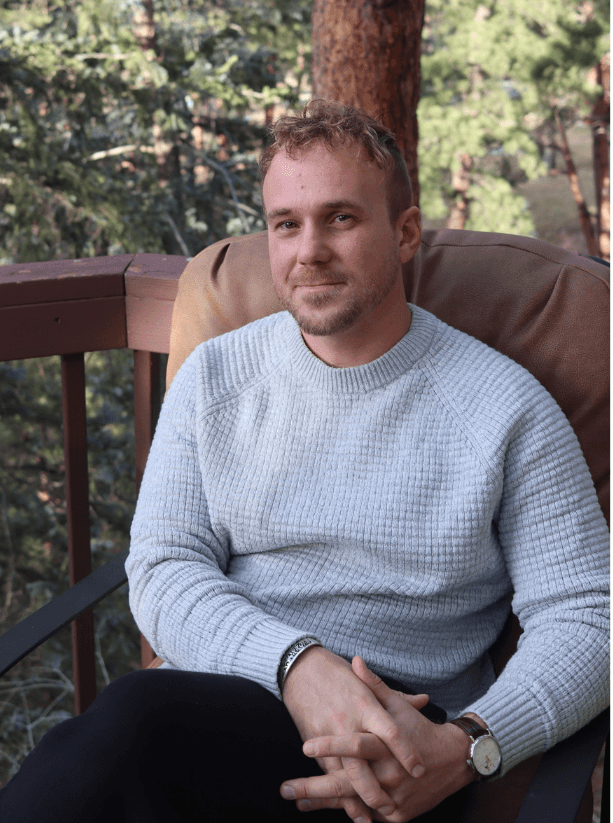
Daniel Vose, MA, SEP
Daniel Vose holds an MA in Somatic Psychology from Naropa University and has helped train hundreds of somatic and attachment practitioners. He is an author who has spent nearly two decades in the somatic psychology field, working with trauma in clinical settings, including high-acuity treatment centers, and trained directly under pioneers in his field like Diane Heller and Peter Levine’s work.
His work draws on somatic psychology, attachment theory, training with indigenous healers, and nearly two decades of one-on-one clinical sessions with people carrying exactly this uniquely awful kind of pain.
If the masterclass resonates, there’s an option to go deeper with a three-session live course. Details shared inside.
Questions
Before you ask
Will there be a replay if I can’t make it live?
Yes. A replay will be available after the session.
Is this therapy?
No. This is education and experiential learning. If you’re in an active crisis, please work with a licensed clinician alongside this kind of content.
Do I need a diagnosis or clinical background to attend?
No. This is for anyone carrying the weight of a betrayal that still lives in their body, whether that happened last year or twenty years ago. If you are a clinician or practitioner, you may find the class instructional for your work with clients.
I’ve already tried therapy and I’m still struggling. Will this be any different?
Possibly. Most talk-based approaches work from the neck up. This works with the nervous system directly, which is where betrayal tends to actually live. That’s a different entry point, not a better or worse one, just different.
Will you be selling something at the end?
There’s brief mention of a three-session follow-up course for people who want to go deeper. The masterclass itself is value packed, complete on its own.
Save your free seat
90 minutes that could change how you understand what happened to you, and what your nervous system has been trying to do about it ever since.
Thursday, August 13·5:30pm Mountain Time·Replay available