
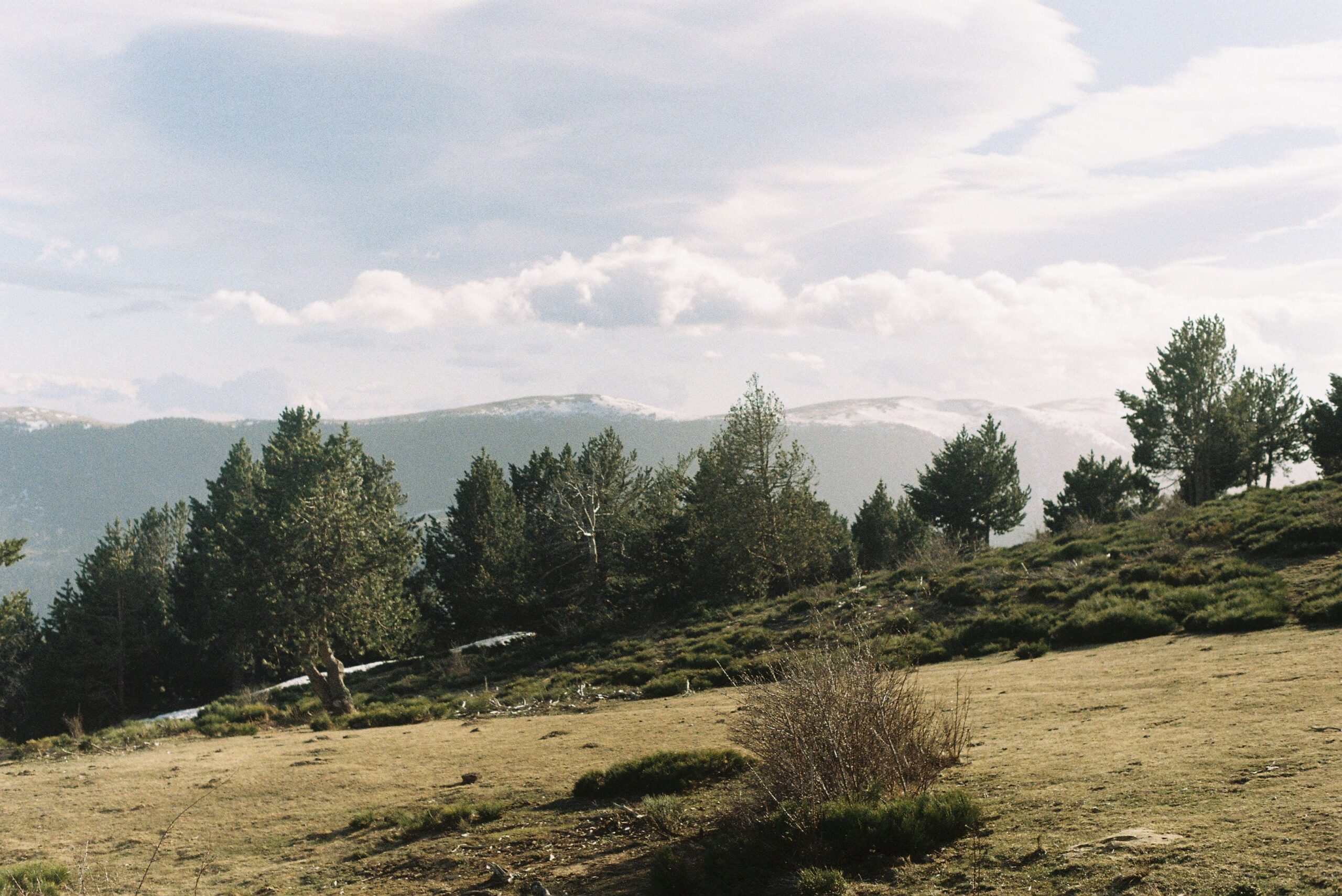
There’s a show called Alone. Contestants get dropped into the wilderness with a camera and a knife, and whoever lasts longest wins. I’ve watched a lot of it. What breaks people first is rarely the cold. It’s usually somewhere around week three, when the isolation stops being a mood and starts working on the machinery underneath it. We’re social mammals. We regulate through other nervous systems, and pull that away long enough, and something in the system starts coming apart.
Betrayal works on that same machinery. It hurts, obviously. What’s less obvious is that it also cuts the line you regulate through in the first place. You don’t just lose the person. You lose part of what you use to find your way back to yourself.
Not every betrayal has a villain in it. Sometimes there’s no bad guy anywhere in the story. Just a moment where the person you reached toward was too occupied with their own survival to register you as a full person standing in front of them. Nothing crosses a line that would hold up in an argument. But something in you registers it anyway, and quietly closes a door.
The nervous system doesn’t wait for a verdict before it decides who’s safe.
Take the mentor dynamic, because I don’t think it gets talked about enough outside of clinical rooms. In my experience, a lot of mentors and people who’ve acquired some authority are carrying more fragile egos than their titles suggest. Somewhere under the position, they know they aren’t better than the people beneath them, and that knowledge makes the position feel borrowed, one slip from being taken back. So some of them keep their people down, less from malice than from a self-preservation that, from where the mentee stands, looks exactly like malice.
You hand someone your admiration, and it’s heavier than it looks. For a while they carry it fine. Then, usually in some offhand comment that doesn’t even register as significant at the time, they set part of it down. Don’t get too big, someone says, half joking. Stay in your lane. You keep giving anyway, your loyalty, the best hours of your week, and you start noticing your own presence matters to them less than you’d assumed. Nothing dramatic. No blowup. The weight just stops coming back your direction, and you quietly start closing up shop.
None of it makes the news. It just makes you smaller.
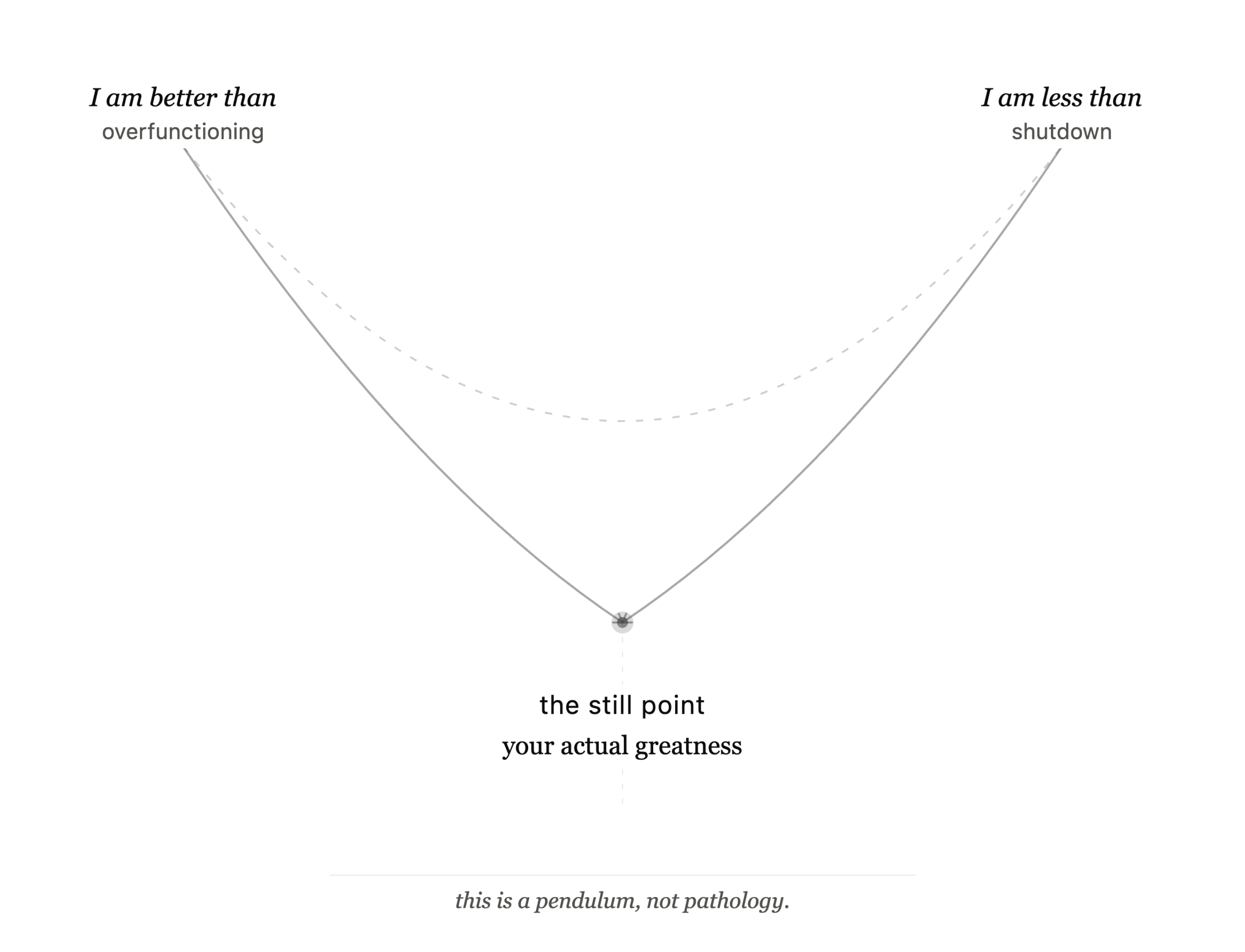
Some part of you takes on the minimization a mentor like that hands you. That part still wants the relationship, so it reaches for something we all learned a long time ago: keep the person up on the pedestal rather than let the relationship come down. You start to believe there might not be much to you after all, which runs straight against something the body has never agreed to give up, an impulse to take up more room, not less.
When someone we admire minimizes us, we tend to believe them faster than we’d believe a stranger saying the same thing. I think this reaches into older circuitry. As kids we needed our parents to be right, because a world where the person raising you is wrong is a far more dangerous world to be small in. Some part of that logic never fully retires. It waits for a new authority figure to land on, and without deciding to, you offer them the same shrinking you once offered a parent. The same old trade: I’ll take up less space, and in exchange the world keeps making sense.
I’ve been sitting with a version of this myself, lately. Old messages keep surfacing. Don’t get too big. Stay in your lane. None of the people I currently answer to are saying anything like that. The body doesn’t check dates before it reacts, though. It recognizes the shape of an old instruction and responds as if the room is the same room it was thirty years ago.
I’m in the middle of stepping more fully into my own authority right now: building courses that are actually mine, finding a voice that isn’t asking permission first. It’s bringing up exactly what you’d expect it to bring up. If you’re doing some version of the same thing, in a job, a family, a friendship, somewhere you were told at some point to stay small, I’d guess some of that same static is running in you too.
Reclaiming that weight is part of what recovering from betrayal actually asks of you. Not power borrowed from someone else’s smallness. Power that’s already yours, and stays yours whether or not anyone agrees to shrink. Power with. Not power over.
Live & Free
The Work With Betrayal Free Masterclass
I will be teaching a free masterclass on betrayal soon, ahead of a live course that goes deeper into this territory. If you feel drawn to that, you are warmly invited. And if you are new to this work altogether, the simplest place to start is also free: the Heal Trauma Bundle.



Free — Join 25,000 Students
Start Healing Your Nervous System
Get the free Heal Trauma Bundle and receive new writing like this as it is published.
Get the Free Bundle