

The first big betrayal of my life took me decades to recognize. I was a small child, about to have ear surgery, and what I remember is a number of adults holding me down while a gas mask came over my face. My parents were there. They watched it happen. Everyone in that room was doing their job, nobody was cruel, and by any adult accounting there was nothing to forgive.
But I did not have an adult’s accounting. I had a child’s body. And somewhere below the reach of words, that body recorded the people I trusted most standing by while strangers overpowered me. It filed the event under betrayal, and it kept the file for decades. I only found it years into my own somatic work, when the body finally told its side of the story. That telling deserves its own piece, and I will write it soon.
I am starting here because this is the thing about betrayal almost nobody understands. Betrayal is physiological. My parents never meant harm, and my body wrote it down anyway. The wound is recorded by the nervous system, on the nervous system’s terms.
Here is the definition I work from. Betrayal happens when you let someone in, when you trust them with something you cherish in yourself, and that trust gets let down. It might be malicious. More often it is simply self-serving. And sometimes, as in that operating room, it is nobody’s fault at all. The other person’s agreement is not required for the wound to be real. Sometimes even your own conscious memory is not.
When people hear I am teaching on betrayal, they usually assume infidelity. In sessions I watch people describe a friendship or a mentor that quietly gutted them over years, then apologize for how much it still hurts, as if betrayal were a word reserved for marriages. We have handed one of the deepest wounds a nervous system can carry over to a single storyline. Mine was written before I could spell the word.
Classical Chinese medicine has an image I keep returning to for why betrayal is its own category of pain. The heart, in that tradition, is the sovereign of the whole system. It houses the shen, the spirit, the radiance you can see in a healthy person’s eyes. The heart is considered so precious that it is never supposed to take a direct blow, so the body appoints a guard. The pericardium, the membrane that wraps the heart, is given its own rank and title: the Heart Protector. It stands at the gate and decides who comes close, and how close. For the few who have earned it, the guard steps aside.
Betrayal is the blow that comes through an open gate.
A stranger’s cruelty lands on the guard, and the guard can take it. That is his work. Betrayal arrives from someone the guard had already stepped aside for, which means it reaches what was never supposed to be touched.
A child barely has a guard at all. In the early years, the people who care for you stand at the gate on your behalf. That is why what happens with parents and family writes so deep. When the ones standing guard are also the ones the blow seems to come from, the body has nowhere to file it, so it files it everywhere.
If you carry shame about having trusted, I want you to hear this clearly. The willingness to open is the treasure the entire system exists to protect. It is among the purest things in you, and it deserves to be dignified, never corrected.
Once you see betrayal this way, as something the body records on its own terms, you start recognizing how many gates there are. It happens at work, in friendships and families, in communities built on trust, and in the quiet ways we hand ourselves over to keep other people comfortable. Each of those deserves its own piece, and I will be writing them. Here I want to stay with just one, because it changed the course of my life.
The community that got me clean at fourteen taught me a discipline I still respect: don’t trust your own impulses yet. Check them with someone steadier. So when I fell in love for the first time, with a girl in that community who had let me know the feeling ran both ways, I did what I had been taught. I asked my sponsor if I could ask her out. He told me to wait. I asked again every other week for about a year, and the answer stayed no, right up until he asked her out himself. When I finally asked her how that happened, she said she could only wait so long.
I sat and stared at a wall for days. The quiet pulling-away from that community that followed was the start of my relapse, though nobody connected those dots at the time, least of all me.
He was seventeen, maybe eighteen. We were kids. I can hold real compassion for the position he was in, and the wound was still a wound. Both are true, and neither cancels the other.
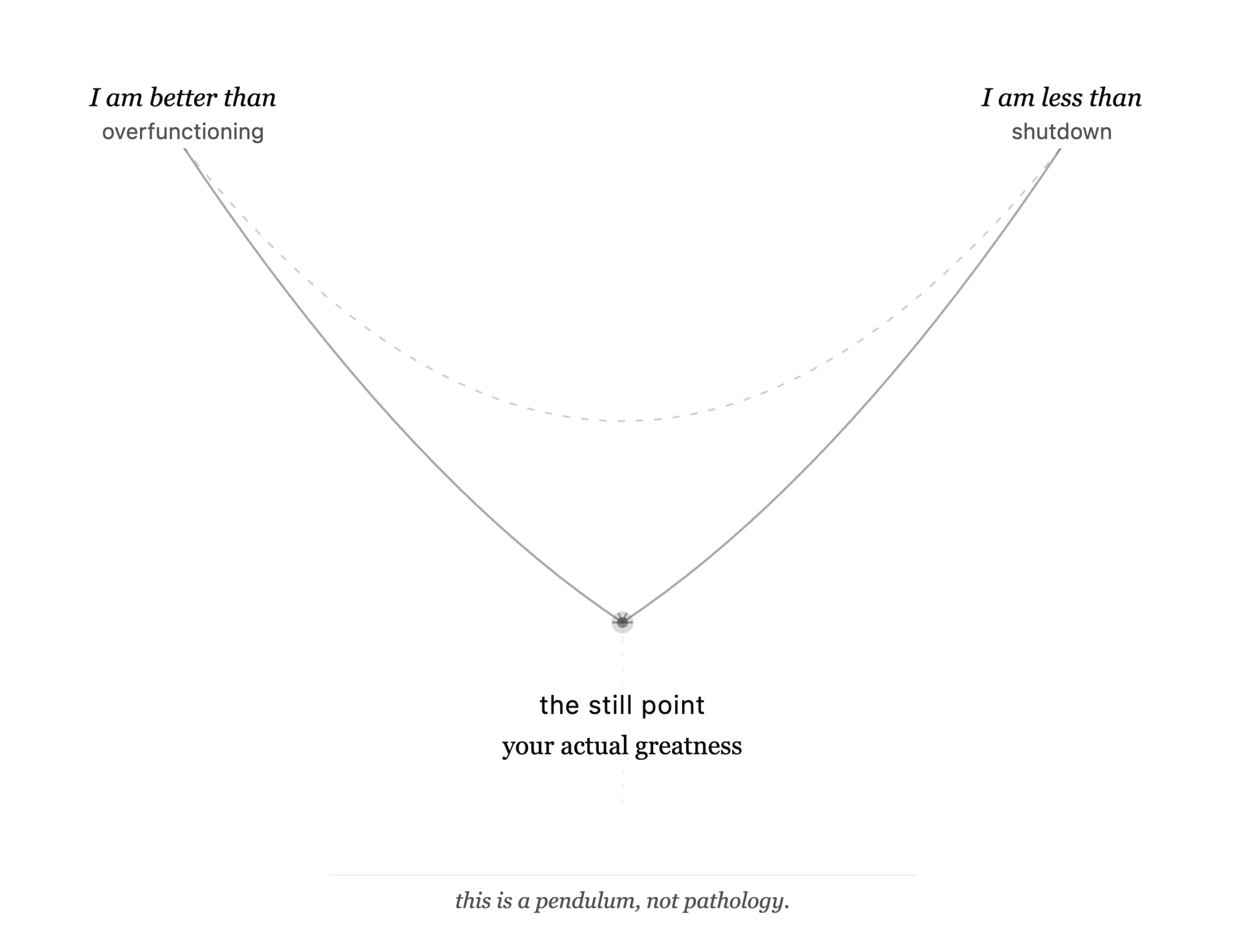
When betrayal goes unnamed and unprocessed, it leaves an imprint. I have come to call it a betrayal imprint: the pattern a broken trust leaves in a nervous system, still running its protection long after the person who caused it is gone. Mine generalized. What began in an operating room and deepened with one sponsor spread quietly to most men in positions of authority and to any woman I was interested in, and I did not notice the spread for years. That is what these imprints do. From the outside it can look like independence. From the inside it feels more like a guard who has stopped taking orders. You may want closeness and still watch yourself test people, or leave before anyone can leave you.
If some of that is familiar, nothing about it means you are broken. It means the guard took his job seriously after the day nobody protected the gate.
Betrayals also stack. A new one rarely lands on neutral ground. It lands on older ones, sometimes from so early in life that no story is attached, only a bodily sense that the ground can give way. The betrayal that found me at fifteen flattened me the way it did because it landed squarely on the one from the operating room. I could not have told you that then. The body knew it the whole time.
What actually helps is a longer conversation than one essay, and it is the center of my work right now. But I will tell you the direction. The guard does not respond to argument. You cannot reason your way back into trust, and the people who love you cannot reassure you into it either. I tried the arguing route for years. The guard responds to felt experience, to anger that finally gets to move through the body instead of turning inward, and to your own inner signals being listened to after years of being overridden. When that kind of experience accumulates, at the body’s pace, the gate becomes a choice again.
A guarded heart is not a healed heart. A healed heart is one whose guard opens the gate freely, because he trusts you to stand with him this time.
The old physicians said the sovereign is never truly wounded, that the guard takes every blow so the shen stays whole. Nearly two decades into this work, that matches what I find in the body. Beneath every betrayal imprint I have ever sat with, the heart itself is intact. Still radiant. Still willing, when conditions are right, to open.
Live & Free
The Work With Betrayal Free Masterclass
I will be teaching a free masterclass on betrayal soon, ahead of a live course that goes deeper into this territory. If you feel drawn to that, you are warmly invited. And if you are new to this work altogether, the simplest place to start is also free: the Heal Trauma Bundle.



Free — Join 25,000 Students
Start Healing Your Nervous System
Get the free Heal Trauma Bundle and receive new writing like this as it is published.
Get the Free Bundle