

If you’ve ever watched the show Alone, where individuals are sent to survive in the wild by themselves, you know that the absence of others does something to us. Not just emotionally. In the body. We are social mammals who rely on connection for regulation, and without it, something starts to come apart.
Betrayal works on that same system. It hurts us, yes of course but it also can significantly undercut the base way that we regulate, which is through connection.
From the outside what we experience as betrayal doesn’t always look like betrayal. Sometimes there’s no villain in the story. Just a moment where the person you reached toward wasn’t aware of you as a full person, they were just more preoccupied with themself, but it still imprints on your nervous system which then sends you the message that it’s not safe to trust.
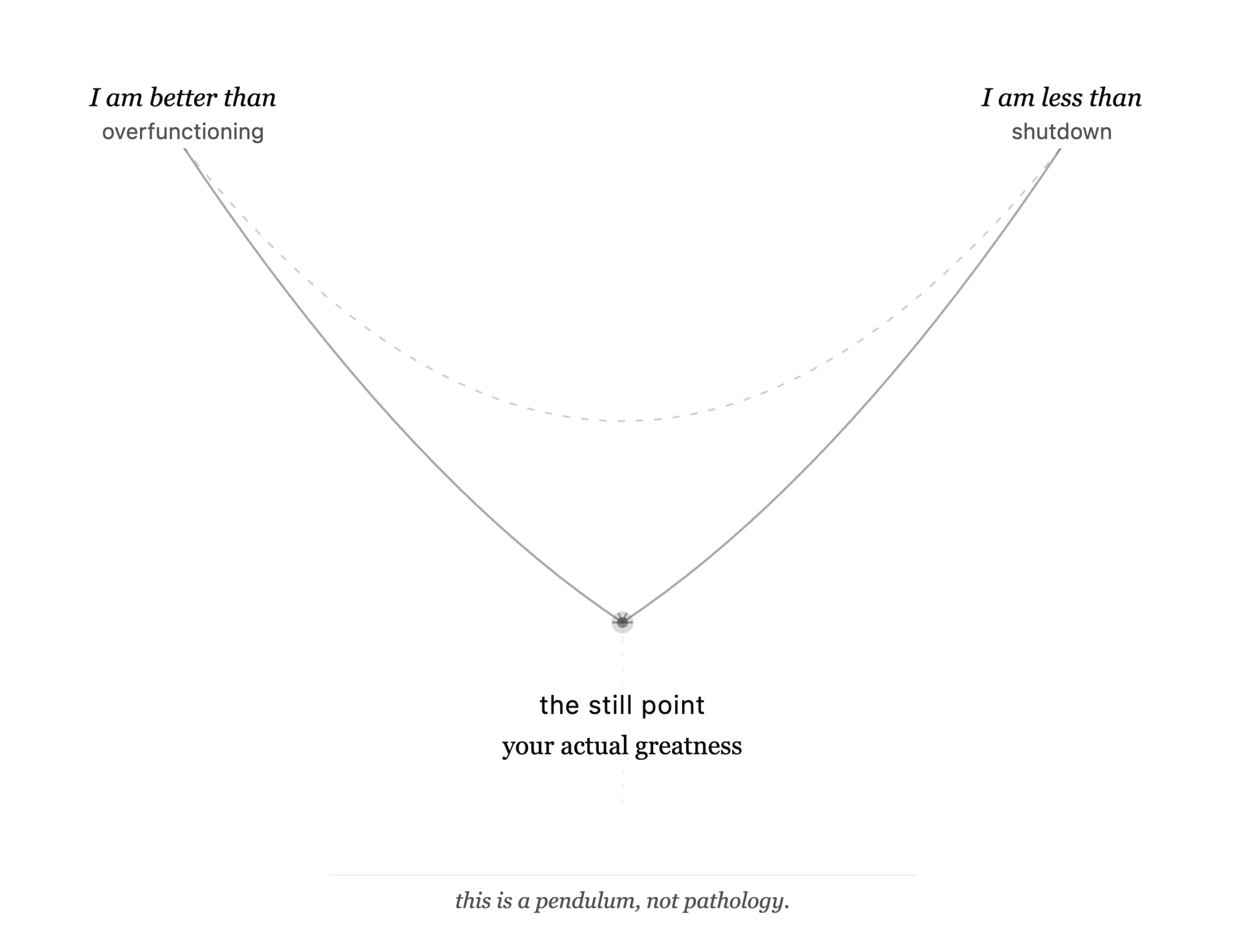
Take the mentor dynamic because it’s not talked about enough. Mentors and people in power positions often have very fragile egos. They have acquired some power but deep down realize they aren’t better than anyone else, so they feel they can easily lose that power. They often try to keep their mentees down not because they don’t care but because they are more invested in self preservation than helping others grow.
You hand someone your admiration, which is really a form of weight, and for a while they carry it well. Maybe it starts small, they tell you not to get too big. Then you start to see that your presence is much less significant in their life than you thought. You gave them loyalty. You gave them your precious lifeforce, your hard work, but they take that for granted. Nothing dramatic happens. You feel hurt and quietly start shutting down.
Don’t get too big. Stay in your lane.
We may take on the minimization. Part of us wants to keep the relationship, so we unconsciously keep them on a pedestal like we do with parents. But in doing that, we may start to feel that they are right, maybe we don’t have much value. But this is in direct contradiction to a fundamental human drive for expansion.
When someone we hold in esteem minimizes us, we are inclined to believe them. I believe it triggers older attachment circuits in the brain. On an evolutionary biological level, when we were children we needed to make our parents right so that life makes more sense and we have a better chance of survival. Then flash forward and we project the parent role onto our mentor, and without realizing it we offer them that same shrinking. The same self-abandonment that once kept us safe.
I’ve been thinking about this a lot lately. I’ve noticed something coming up in my own system. Old messages. Don’t get too big. Stay in your lane. None of my current mentors are saying that. But the older ones did, and the body doesn’t always know the difference between then and now.
I am actively working on stepping into my power more fully. Branching out with my own courses, my own voice, my own direction. It is bringing up a lot. And I imagine many of you are doing some version of the same thing in your own lives, in your own relationships, in the places where you’ve been told in some way to stay small.
Reclaiming power is one of the central pieces of recovering from betrayal. Not power over anyone. Embodied, humble power. Power with and not over. The kind that doesn’t need to keep anyone small to feel real.
Live & Free
The Work With Betrayal Free Masterclass
I will be teaching a free masterclass on betrayal soon, ahead of a live course that goes deeper into this territory. If you feel drawn to that, you are warmly invited. And if you are new to this work altogether, the simplest place to start is also free: the Heal Trauma Bundle.




Free — Join 25,000 Students
Start Healing Your Nervous System
Get the free Heal Trauma Bundle and receive new writing like this as it is published.
Get the Free Bundle